
Academic Praxis
Malinalli López is a film producer and scholar whose work examines the relationships in Mexican and Chicana/o communities and how they maintain, reconstruct, and reimagine ancestral knowledge, land, memory, and storytelling.
Her filmmaking and scholarship engage Indigenous epistemologies and cosmologies not as sites of identification, but as living intellectual and relational possibilities. She investigates how cinema can function beyond representation—as a technology through which memory, landscape, ceremony, and cultural knowledge are brought into relation with the present while creating possibilities for the future.

Corazón y Chrome
In producing and directing Corazón y Chrome, I approach filmmaking as a form of research praxis in which scholarship, visual experimentation, community knowledge, and cinematic production inform one another.
Rather than treating lowrider culture solely as subculture, commodity, or aesthetic expression, the project investigates the automobile as a mobile archive: a site where memory, craftsmanship, geography, ancestral imagery, kinship, and cultural survival converge.
The film's attention to chrome, movement, hydraulics, streets, landscape, and temporality asks how cinematic form might make relationships visible that conventional historical narratives frequently separate.
The camera therefore becomes more than an instrument of documentation. It becomes part of a relational practice through which image, sound, memory, community, and place participate in the production of knowledge.
Research Constellation
How do Indigenous temporal systems complicate colonial ideas of linear history, productivity, progress, and futurity?
Time
Ceremony
How can ritual and relational practice illuminate forms of knowledge that exceed representation?
How do landscapes preserve histories of migration, colonization, ecological knowledge, violence, and survival?
Land
Film Praxis
How can filmmaking itself become a method of historical, cultural, and theoretical inquiry?
Futurity
How can ancestral knowledge participate in imagining futures without treating Indigenous cultures as belonging exclusively to the past?
How do communities carry knowledge across rupture, displacement, conquest, and generational change?
Memory
Indigenous Epistemologies
How might ancestral systems of knowledge inform contemporary questions without reducing Indigenous traditions to metaphor or an undifferentiated past?
Teaching and Pedagogy
My teaching brings cinema, cultural history, Indigenous epistemologies, visual analysis, and media production into conversation. Courses and seminars are designed around the principle that film can operate simultaneously as cultural text, codex, historical archive, aesthetic practice, and method of inquiry.
Courses & Seminars
Teaching Ethnic Studies Through Cinema
Film as historical evidence, cultural memory, and a site for analyzing race, migration, power, and representation.
Narrative Film, Indigenous Epistemologies & Visual Culture
Approaches to visual culture grounded in relationships among land, temporality, ceremony, materiality, and ancestral knowledge.
Documentary Storytelling as Historical Inquiry
Documentary production as a research methodology connecting oral history, archives, landscape, cinematography, and interpretation.
Film Production & Migration
Cinema, migration, borders, memory, labor, family, and belonging across the Americas.
Cinema & Ethical Storytelling
Emerging media, cultural memory, artificial intelligence, archives, authorship, and the ethics of technological representation.
Scholarly Interventions
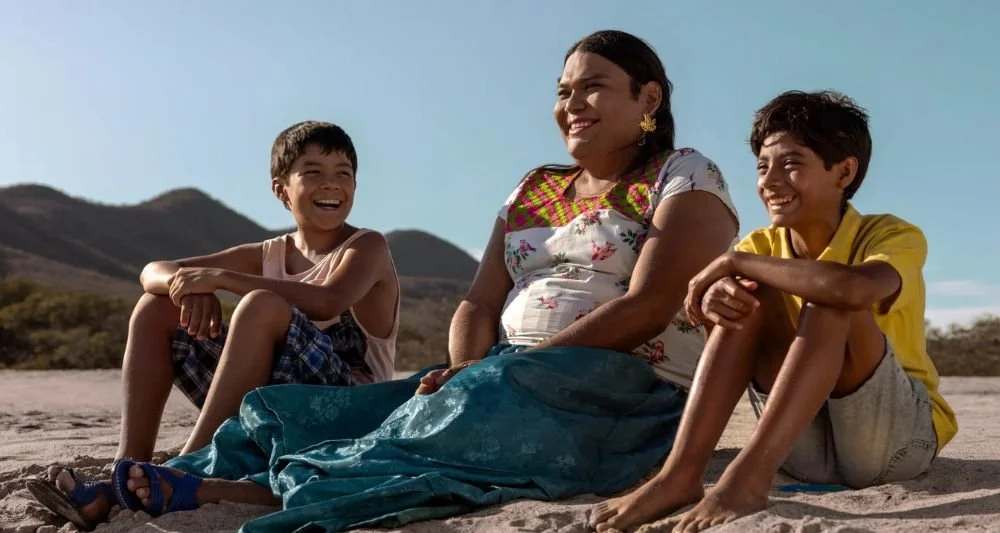
The Fluidity of Muxe Identity in El secreto del río
Published in Senses of Cinema
This essay examines El secreto del río through Zapotec histories and epistemologies rather than treating gender fluidity exclusively through contemporary Euro-American theoretical frameworks.
By locating Muxe identity within specific cultural, geographic, historical, and cosmological relationships, the essay argues for forms of media criticism capable of recognizing Indigenous knowledge systems as intellectual frameworks rather than simply as objects of representation.